Laurer UPC Home

Category

Learning & Development

11 articles

Perpetually Behind: How Reactive Training Cycles Keep Organizations One Step Short of What the Market Demands

Perpetually Behind: How Reactive Training Cycles Keep Organizations One Step Short of What the Market Demands

Most corporate training programs are designed to address problems that have already surfaced, not challenges that are approaching. By the time a curriculum clears internal approvals and reaches employees, the competitive environment has often moved on entirely. Organizations that fail to anticipate skill needs before they become urgent are not developing their workforce — they are perpetually catching up.


Collected but Never Acted On: The Quiet Failure at the Heart of Most Organizational Feedback Programs

Collected but Never Acted On: The Quiet Failure at the Heart of Most Organizational Feedback Programs

Organizations invest considerable resources in gathering employee feedback through 360-degree reviews, engagement surveys, and multi-rater assessments — yet the insights those instruments generate rarely translate into substantive change. The gap between data collection and meaningful action is not a technology problem or a budget problem; it is a structural and cultural one. Understanding why feedback dies in transit is the first step toward building systems that actually develop people.

Delegation Without Development: Why Passing Work Down the Chain Isn't the Same as Building a Stronger Organization

Delegation Without Development: Why Passing Work Down the Chain Isn't the Same as Building a Stronger Organization

Delegation is widely celebrated as a hallmark of effective leadership, yet most organizations practice a version of it that redistributes tasks without ever strengthening the people receiving them. When leaders confuse workload transfer with genuine capability development, the gaps that result don't disappear — they compound quietly until they become a structural liability.

The Mid-Career Exodus: What Happens When Your Most Capable People Stop Believing in Their Future With You

The Mid-Career Exodus: What Happens When Your Most Capable People Stop Believing in Their Future With You

Mid-level professionals represent the operational backbone of most American organizations, yet they leave at disproportionately high rates—not for better salaries, but because they've lost faith in their employer's ability to develop them meaningfully. Understanding the precise inflection point where confidence erodes is the first step toward reversing a trend that quietly destabilizes organizational performance.

When High Performers Stop Growing: Diagnosing and Dismantling the Invisible Ceiling

When High Performers Stop Growing: Diagnosing and Dismantling the Invisible Ceiling

Many organizations invest heavily in attracting top talent, only to watch their best people quietly disengage once upward momentum stalls. The phenomenon of high-performer plateau is neither accidental nor inevitable — it is a structural problem with structural solutions. This article examines why capable employees stop developing and what organizations can do to restore meaningful growth trajectories.

The Silent Tax: How Collaboration Failures Between Departments Drain Performance Across the Entire Organization

The Silent Tax: How Collaboration Failures Between Departments Drain Performance Across the Entire Organization

Most organizations measure what happens within their functions with considerable precision—yet the costly breakdowns that occur between functions often go entirely untracked. Poor cross-functional collaboration imposes a compounding penalty on productivity, employee retention, and customer outcomes that rarely appears in any dashboard but is felt everywhere across the enterprise. This article presents a diagnostic approach to identifying where collaboration gaps are costing your organization the

The Approval Bottleneck: How Overcomplicated Authorization Chains Are Slowing American Business to a Halt

The Approval Bottleneck: How Overcomplicated Authorization Chains Are Slowing American Business to a Halt

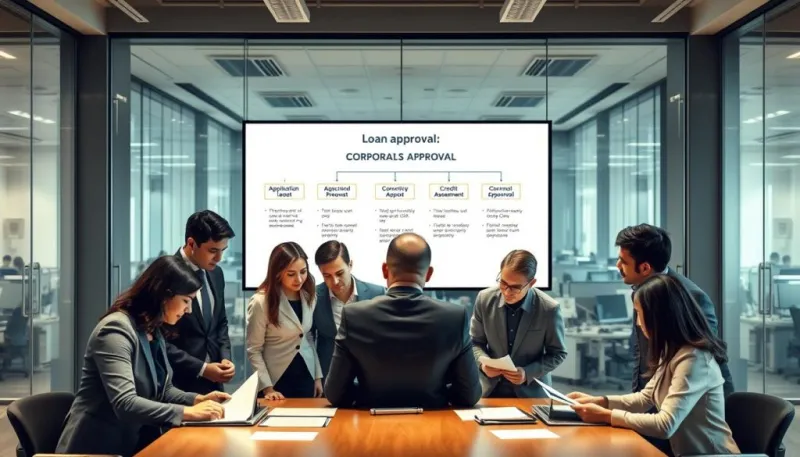
Across American organizations, layers of accumulated approval requirements have quietly transformed routine decisions into bureaucratic endurance tests. The result is not just slower execution — it is a systemic erosion of employee initiative, organizational agility, and competitive positioning. This article investigates how these authorization structures develop, what they truly cost, and how organizations can restore decision-making velocity without abandoning appropriate oversight.

Workforce Capabilities Don't Age Gracefully: Why Your Development Strategy Needs a Complete Overhaul

Workforce Capabilities Don't Age Gracefully: Why Your Development Strategy Needs a Complete Overhaul

The assumption that employee training is a periodic event—something scheduled, completed, and filed—has become one of the most costly misconceptions in modern talent strategy. As the useful life of professional skills continues to compress, organizations that cling to static development models are quietly accumulating a talent debt they may not recognize until it becomes a crisis. This article makes the case for a fundamental redesign of how American organizations invest in workforce capability.

When Measurement Becomes the Message: Rethinking Performance Management in the Modern Workplace

When Measurement Becomes the Message: Rethinking Performance Management in the Modern Workplace

The annual performance review was designed to drive accountability and align individual effort with organizational goals. In practice, decades of research and mounting employee feedback suggest it often achieves the opposite — generating anxiety, eroding trust, and quietly dismantling the very culture leaders are working to build. This article examines the structural flaws in conventional performance management and presents a compelling case for a more human-centered alternative.

Building Organizations That Bend Without Breaking: A Practical Guide to Structural Resilience

Building Organizations That Bend Without Breaking: A Practical Guide to Structural Resilience

In an era defined by supply chain volatility, workforce transformation, and rapid market shifts, the ability to adapt is no longer a competitive advantage—it is a survival requirement. This guide outlines the concrete systems, leadership practices, and cultural investments that distinguish organizations capable of thriving through disruption from those that merely endure it.

Beyond the Checkbox: How Forward-Thinking Companies Are Turning Corporate Training Into a Strategic Asset

Beyond the Checkbox: How Forward-Thinking Companies Are Turning Corporate Training Into a Strategic Asset

For decades, mandatory corporate training was treated as a legal obligation rather than a business investment — something to be completed, documented, and forgotten. That era is ending. A new generation of Learning and Development leaders is redesigning training programs from the ground up, using emerging methodologies and smarter technology to drive measurable performance outcomes. Here is what that transformation looks like in practice.